
 +923015016898
 supremeshilajit@gmail.com

Blog
Everything You Need to Know About Saffron in Pakistan

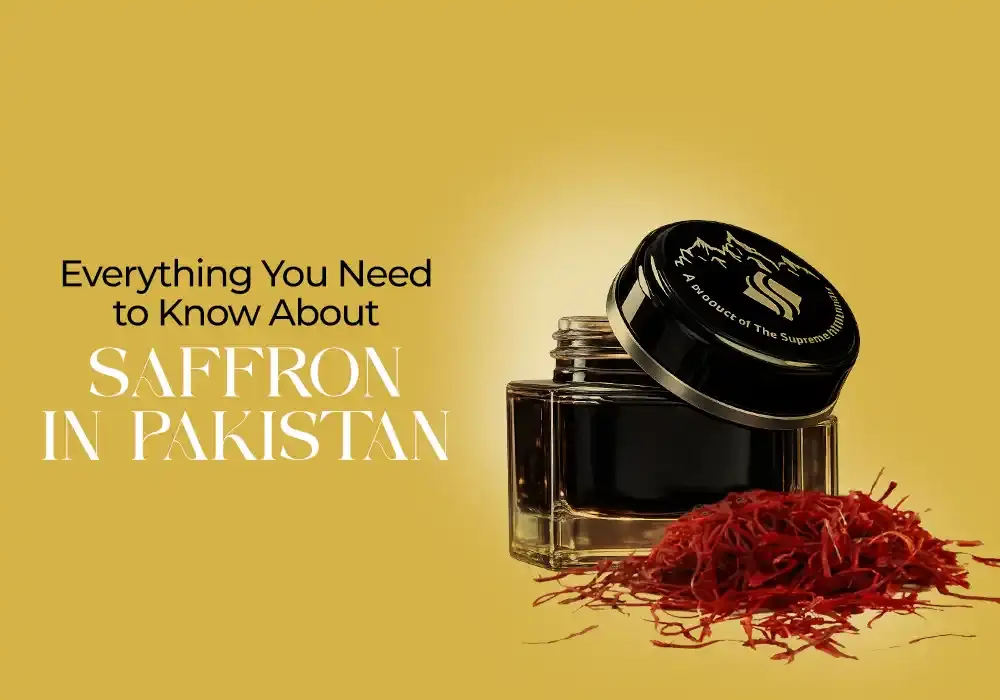
If you’ve recently searched for zafran price, chances are you paused for a second after seeing the numbers. It’s completely understandable. Saffron is one of the most expensive spices in the world, and in Pakistan, its price can feel even more surprising. But once you understand the story behind those delicate red strands, the price starts to make sense.
In our homes, zafran isn’t just something we shower into food. It’s added to warm milk for strength, stirred into kehwa on winter evenings, mixed into kheer on Eid, and even gifted during weddings. So when we talk about saffron, we’re talking about tradition, health, emotion, and trust, not just money.
In this guide, we’ll gently walk through everything: what saffron really is, the current zafran price in Pakistan 1 tola, the truth about seeds of zafran, the difference between Kashmiri Zafran (saffron) and Iranian saffron, and even the comparison of Shilajit vs Saffron: Which is Better?
Let’s investigate it together, merely and frankly.
What is Zafran
Many people still ask, What is zafran?
Zafran is saffron, the dried red stigmas (thin strands) taken from a purple flower called Crocus sativus. Each flower produces only three tiny threads. These threads are cautiously handpicked and preserved.
Now evaluate this:
It takes approximately 150,000 flowers to make just one kilogram of saffron.
That’s why it’s named “red gold.”
In Pakistan, zafran is utilized in:
- Rice dishes
- Sweet dishes
- Kehwa
- Milk for wellness
- Conventional herbal curatives
It’s not just a seasoner, it’s a portion of our society.
Understanding the zafran price in Pakistan
Let’s talk about the zafran price.
Costs count on:
- Source (Kashmiri or Iranian)
- Pureness
- Tier
- Market value
- Import costs
- Currency exchange rates
Common in Pakistan:
- 1 gram reaches between PKR 800 and PKR 1,800
- Zafran price in Pakistan 1 tola (roughly 11.66 grams) normally ranges between PKR 9,000 and PKR 18,000
These prices can swing based on the period and demand.
If you find saffron being sold at extremely low rates, it’s wise to question its authenticity. Real saffron is never cheap, because producing it is extremely labor-intensive.
Why is the zafran price in Pakistan 1 tola So High?
It helps to understand the effort behind it.
Saffron:
- Bloom only once a year
- Must be harvested by hand
- Requires careful drying
- Grows in limited climates
- It is mostly imported into Pakistan
No machine can quickly produce it. Every strand passes through human hands.
That’s why the zafran price in Pakistan, 1 tola, feels high, because the work behind it is high too.
Kashmiri or Iranian: Which One Is More Beneficial?
This question comes up a heap in Pakistan.
Kashmiri Zafran (saffron)
Matured chiefly in Pampore (Kashmir), Kashmiri Zafran (saffron) is illustrious for:
- Deep red color
- Sinewy aroma
- Somewhat thicker forms
- High coloring capability
Many Pakistanis feel emotionally attached to Kashmiri saffron due to territorial and social ties. It’s often a bit and slightly more pricey.
Iranian Saffron
Iran produces about 90% of the world’s saffron. Iranian saffron is:
- Widely available
- Often slightly more affordable
- Graded professionally (Super Negin is top quality)
- Strong in color and flavor
So which is better?
Both offer similar health benefits if pure. The real difference lies in aroma intensity, branding, and emotional preference.
If authenticity is guaranteed, both are beneficial. Purity matters more than origin.
Important Truth About seeds of zafran
Many people search for saffron seeds of zafran, thinking saffron grows like regular crops.
Here’s something crucial:
Saffron does not develop from seeds.
It grows from corms (bulb-like roots).
So if someone is selling “seeds of zafran,” be cautious. It may not be genuine saffron planting material.
Awareness protects your money.
Health Benefits of Saffron
Saffron has been used for centuries in traditional medicine.
It may be related to:
- Mood betterment
- Loss of stress
- Encouraging heart health
- Increase resistance
- Improve skin glow
- Improving digestion
Many families add a few patterns to warm milk during winter. It’s satisfying, fragrant, and feels nutritious.
But think, saffron is compelling in little quantities. You don’t want much.
What About Shilajit With Zafraan?
You may have heard about shilajit with Zafraan being promoted as a powerful health combination.
Traditionally, this mixture is considered to:
- Modify stamina
- Gain energy
- Assist vigor
- Beef up the resistance system
Shilajit is a mineral-rich resin found in mountainous areas. Saffron is plant-based and rich in antioxidants.
When combined, they are often marketed as a wellness booster.
However, both are frequently adulterated in the market. Always buy from trusted sources.
Shilajit vs Saffron: Which is Better?
When comparing Shilajit vs Saffron: Which is Better?, the answer depends on your wellness scores.
Saffron is typically utilized for:
- Temper support
- Antioxidant performance
- Skin health
- Cerebral equality
Shilajit is rarely used for:
- Capability
- Vigor
- Physical strength
- Male vitality
They serve various goals. One is not existence improved; they merely support different needs.
How to Identify Pure Saffron
Because the zafran price is high, fake saffron is common.
Here’s how you can check:
1. Water Test
Place strands in warm water.
Pure saffron releases color slowly over time.
Fake saffron releases an instant bright red color.
2. Smell
Real saffron smells slightly sweet, earthy, and strong.
3. Taste
It tastes slightly bitter, not sweet.
4. Appearance
Pure strands are irregular and trumpet-shaped at one end.
Taking a few minutes to test can save you thousands of rupees.
Why Zafran Feels So Special in Pakistan
Think about your childhood.
Warm milk with saffron on cold nights.
Kehwa served to guests.
Sweet rice at family gatherings.
A bride is being given saffron milk before her wedding.
Zafran carries emotion.
So when people look up zafran price, they’re not just comparing spice rates. They’re deciding whether they can afford a tradition.
That emotional connection makes awareness even more important.
Smart Buying Tips
If you’re planning to buy saffron:
- Compare rates from multiple reputable sellers
- Avoid powdered saffron
- Ask for the origin
- Start with a small quantity
- Check the packaging date
- Store properly
Sometimes, sellers increase the zafran price in Pakistan by 1 tola simply because buyers are unaware of the average market rates.
Cognition gives you sureness.
Storage Tips to Maintain Quality
Since saffron is costly:
- Store in an airtight glass container
- Keep out of sunlight
- Confront wetness
- Use within 1–2 years
Decorous retention keeps odor and effectiveness intact.
Final Thoughts
Knowing the zafran price in Pakistan is about more than numbers. It’s about knowing what you’re buying.
Now you understand:
- Exactly what is zafran
- Why is the zafran price in Pakistan 1 tola high
- The truth about the seeds of zafran
- The difference between Kashmiri Zafran (saffron) and Iranian saffron
- The benefits of shilajit with Zafraan
- The comparison of Shilajit vs Saffron: Which is Better?
Saffron is rare. It’s delicate. It’s precious.
When you buy it with awareness, you’re not just purchasing a spice, you’re protecting your money and honoring tradition.
And that’s something worth understanding.